Agent readiness
Inspect server source and CLI locations, static declarations, and prior session preflights. Missing and uncertain results stay visible. No Agent code runs. Read the guide.
v0.18.0 • Local-first • Autopilot default off
Inspect Agent source and CLI locations, static protocol declarations, and prior session preflights in Flight Deck. Use current and legacy skill loaders. Keep guided Mission launch, recoverable receipts and exact evidence review, with final approval in human hands.
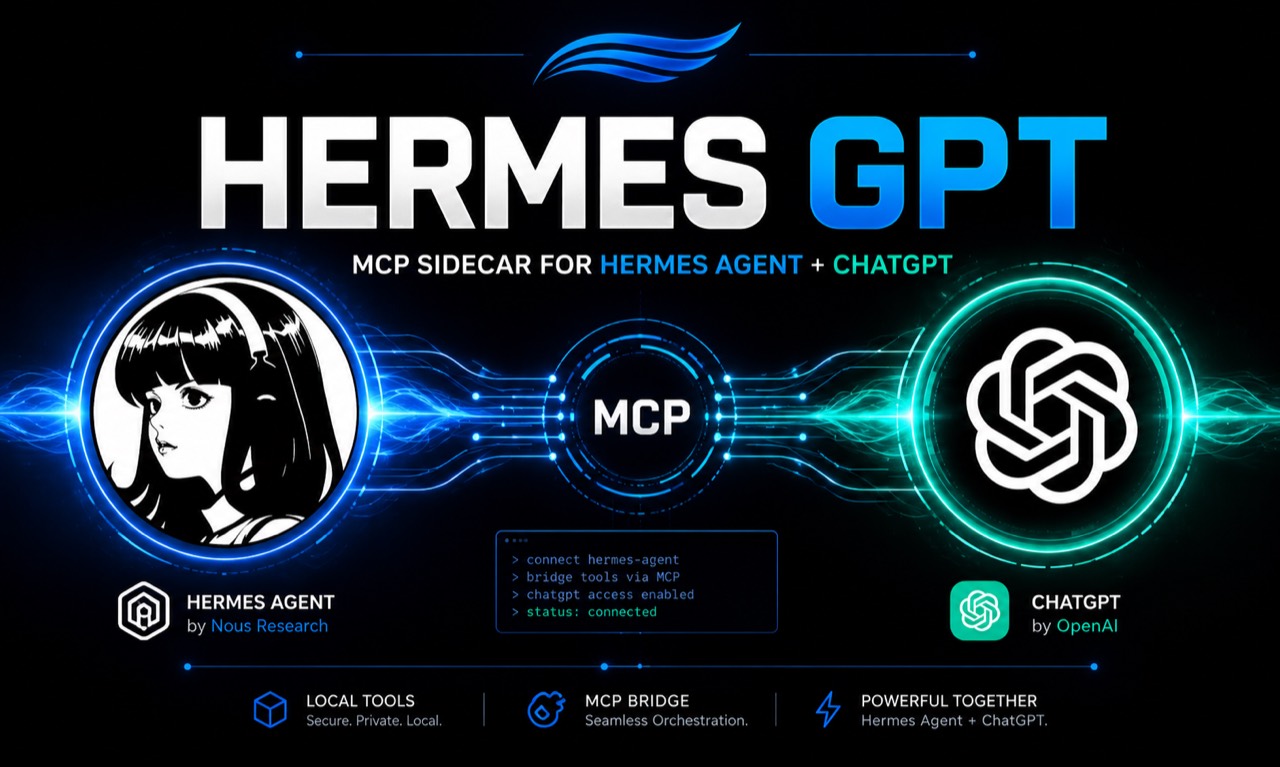
What v0.18.0 adds
Read-only Agent observations and compatibility with both skill-loader APIs. Source identity, CLI selection and static protocol declarations stay distinct from live acceptance. Existing mutation gates and the 139-tool neutral MCP surface remain unchanged (140 with Finance).
Inspect server source and CLI locations, static declarations, and prior session preflights. Missing and uncertain results stay visible. No Agent code runs. Read the guide.
Skill validation supports both discovery APIs while preserving profile-scoped explicit loading, disabled preprocessing and fail-closed admission.
Set an objective, acceptance criteria, profile, budget posture and bounded runtime. Preview, then confirm through the existing Autopilot and Operator gates.
A stable request id reserves one launch before effects. After a disconnect, inspect its receipt. Partial or unknown work is never automatically redispatched.
Open pending reviews from the Owner inbox with full contract and task references. Stale bindings and executing reviewers are refused. Reconciliation and final approval stay separate.
See masked targets, pending work, backoff and unverified sends. This page never sends or resends. Agent readiness is inspected on its separate page. Daily Operations guide.
hermes_plan_create/get/list/validate/decompose/review/node_transition/set_status: a deterministic, bounded decomposition DAG over a MissionSpec. Plan mutations touch only the isolated plan store and are read-only with respect to the Mission lifecycle.
hermes_capability_manifest folds the Fabric node registry, Fleet authority manifest, profile toolsets/skills, and provider manifests into one queryable index. hermes_mission_ledger is a merged, replayable, cursor-paginated event timeline. No mutation path exists.
hermes_budget_set/get/check/record: a per-mission spend envelope with a read-only budget_check evaluation surface. v0.12 adds the gated D3 enforcement rung: when the flags are armed, a crossing pauses the Mission through the existing transition, spools one fleet-attention interrupt, and records one budget_events break row.
hermes_placement_score/candidates/get/list: deterministic hard filters then soft scores over the derived capability index. Scoring is unchanged and still decision-only; would_assign is true only for a dispatch that actually happened under the v0.12 L2 gates, and real dispatch stays on the existing contract, fleet, and delegation authority surfaces.
An 8-class taxonomy classifies an authoritative observation envelope and proposes the deterministic smallest-first recovery action, recorded on a controller_plan row. That classification surface stays decision-only; executing the proposed action is the separate, default-off v0.12 L2 rung.
A durable, default-off Mission worker schedules ready nodes through existing authority surfaces. v0.14 carries declared minimum/maximum artifact sizes and optional SHA-256 values into immutable Work Contracts. Rework preserves the requirements; final Mission approval remains Owner-only.
System Architecture
Autopilot advances ready MissionPlan nodes through existing authority surfaces, then reconciles against durable observed state. It does not bypass Work Contracts, budgets, or owner approval.
Guided launch, durable receipt recovery, exact contract review and read-only delivery inspection. Human approval remains separate from execution and evidence validation.
Default-off Owner inbox notifications through Hermes-configured platforms and iMessage, stable inbox item ids with acknowledgements, Flight Deck actions through the same gated tools, one-call Mission launch behind the Autopilot gate, and a safe package upgrade. No new authority; Owner-only final approval is unchanged.
Read-only hermes_owner_inbox across Missions, Autopilot, and controller attention; advisory hermes_review_assess behind Jev and review-assist gates, never evidence; HERMES_GPT_TOOL_PROFILE with chat-lean; and explicit-off file-backup configuration. 138 tools by default. Owner-only final approval is unchanged.
Declared artifact size/digest checks, durable 30-second delivery grace, bounded recovery after confirmed artifact failures, and clear completion evidence in Flight Deck. Requirements survive rework unchanged. No new tools or authority; final Mission approval remains Owner-only.
ChatGPT, Codex, Cursor, Claude Desktop, or another trusted MCP client submits a bounded request to Hermes GPT.
The controller observes authoritative mission, plan, delegation, and runner state through the derived capability manifest and mission ledger.
Ready nodes are dispatched within configured concurrency. Delegation reconciliation reads runner and Fabric records; Work Contract evidence must validate against observed state before a node completes.
Approval and high-impact nodes are never dispatched or advanced. Autopilot waits for the owner, then resumes through existing authority surfaces; only Owner-gated approval can complete the Mission.
Interactive Sandbox
Explore the policy model without touching a real Hermes installation. The simulator mirrors dry-run-first behavior and Owner acknowledgment requirements.
Capabilities
vNext adds the controller layer without weakening the security and evidence invariants shipped in v0.6 through v0.9.
Tiered authority from read_only through owner, with explicit direct mode, confirmation gates, and dry-run-first mutation.
Completion is validated from observed state, including declared artifact sizes and optional expected digests. Changing or unreadable evidence remains unverified. Size and integrity checks do not replace semantic review.
v0.9 adds the first-class durable Mission runtime with Owner-gated final approval, unified delegation lineage, a durable event bus with a WebSocket stream, and runner-neutral job supervision.
v0.8 Fabric: authenticated peers, capability-aware auto routing, hash-verified remote evidence and artifacts, and same-attempt reconciliation — with the coordinator authoritative.
Supported OpenAI products reach loopback Hermes GPT through an outbound-only private tunnel path, and hermes_export_file provides workspace-authorized binary transfer with denied-path enforcement and size caps.
Mission Control, event history, review evidence, diagnostics, recovery tools, and Fabric routing views keep long-running autonomy inspectable. v0.16 registers 138 tools with every optional gate unset (139 on the connector acceptance surface with finance enabled). Autopilot adds 4, attention delivery adds 1, Jev adds 3, and review assist adds 1 more when both of its gates are set.
Install
Install from PyPI or run the current checkout. Keep the HTTP server on loopback unless you deliberately configure an authenticated private boundary.
python -m pip install hermes-gpt==0.18.0Agent readiness requires 0.18.0 or newer; guided launch, keyed receipts and the review workbench require 0.17.0 or newer. Verify availability on GitHub and PyPI independently before installing. Autopilot requires HERMES_GPT_AUTOPILOT=1 and the normal Operator policy gates. Read the setup guides.
git clone https://github.com/asimons81/hermes-gpt.git
cd hermes-gpt
python -m pip install .
hermes-gpthermes-gpt --http --host 127.0.0.1 --port 7677Endpoint: http://127.0.0.1:7677/mcp. For supported OpenAI products, prefer the OpenAI Secure MCP Tunnel path documented in the repository.
Changelog
Source tags and published artifacts can differ. Verify GitHub and PyPI independently when updating.
Passive source and CLI observations, static declarations and prior session preflights, bounded help probes and modern/legacy skill-loader support. 139 tools with every optional gate unset; live acceptance remains separate.
Guided Mission launch, recoverable receipts, exact evidence review and read-only delivery health.
Owner inbox notifications (default off) through Hermes and iMessage, inbox acknowledgements and Flight Deck actions, a one-call Mission launch (Autopilot-gated, dry run first), and safe package upgrades. Every new mutating path keeps its existing gates. 138 tools with every optional gate unset.
Read-only Owner inbox, advisory review assist (default off, never evidence), connector tool profiles (full, operator, chat-lean), and explicit-off file backups. Every mutating path keeps its existing gates.
Declared artifact size and SHA-256 checks carried by immutable Work Contracts, a durable 30-second delivery grace, bounded recovery after confirmed artifact failures, and Flight Deck completion evidence. Autopilot remains default off.
A durable, default-off Mission scheduler with bounded parallel execution, observed-state validation, retries and replans, budget checks, and Owner approval frontiers. Autopilot uses existing authority surfaces and cannot approve or complete a Mission.
vNext slice 2: budget D3 hard-block enforcement (pause through the existing transition, one fleet-attention interrupt for the delivery broker, one budget_events break row) and the controller L2 rung (at most one smallest recovery action per pass, dispatched through the existing authority surfaces, intent recorded before dispatch). Both are default-off behind per-call confirm plus a machine gate, direct-mode Operator policy, and per-mission flags — and byte-identical to v0.11.0 while unarmed. 137 tools; no new mutating surface by default.
Opt-in Gemini Spark custom-app client profile (verified end-to-end), MCP Python SDK 2.x support with SDK 1 retained, profile-aware Bot Chat and session delivery, fleet loopback Agent Cards, and the post-v0.10 security remediation. 137 tools; no new mutating surface by default.
MissionPlan decomposition DAGs, read-only capability-manifest and mission-ledger views, a dry-run budget envelope, placement scoring, an 8-class failure taxonomy with recovery matrix, and a shadow/observe controller with GREEN/YELLOW/RED telemetry. 27 new tools (137 total); none can mutate a Mission, dispatch, or approve.
First-class durable Missions with Owner-gated final approval, unified delegation lineage across runners, a durable live-event bus with WebSocket stream, runner-neutral job supervision, and the bounded Finance bridge.
Authenticated cross-machine Swarm execution, capability-aware routing, remote evidence and artifact admission, restart/timeout/cancel reconciliation, write-ownership safeguards, and Fabric Flight Deck visibility. Passed fresh real two-machine G6 acceptance and independent review.
Production review evidence, structured redacted event history, durable encrypted token storage, and restart-safe Swarm continuity.
Read-only operational views, observed-state completion validation, and bounded DAG orchestration with explicit ownership and human approval.
Codex as MCP client plus policy-gated delegated Codex CLI work and review.